

Accessible by Design: What Wellness and Holistic Health Businesses Need to Know
Accessible web design is one of the smartest investments a wellness or holistic health business can make. It helps more people access your services, strengthens your brand, improves user experience, and supports better visibility in search engines.
What is Accessible Web Design
Accessible web design means building a website that everyone can use – regardless of ability, age, or how they access the internet. It follows a set of guidelines known as WCAG (Web Content Accessibility Guidelines), which provide a framework for making digital content more usable for people with a wide range of needs.
In practical terms, a WCAG-compliant website includes things like:
- Clear, readable fonts that are easy to see on any screen
- Strong color contrast between text and backgrounds
- Alt text on images so visually impaired users using screen readers know what’s being shown
- Keyboard-friendly navigation for users who can’t use a mouse
- Captions on videos for users who are deaf or hard of hearing
- Simple, logical page structure that assistive technologies can easily read and interpret
Think of it less as a technical checklist and more as a commitment to making your wellness space welcoming to everyone – online, just as you would in person.
Why is It Important for Wellness and Holistic Health Businesses
Wellness is about inclusion. It’s about helping people feel better, live fuller lives, and access the care and support they need. So it only makes sense that your website – the front door to your business – should be open to everyone.
Consider this:
Roughly 1 in 4 adults in the United States lives with a disability — about 61 million people. Many of them navigate the web using assistive technologies, adaptive settings, or alternative interaction methods, and all of them benefit from websites designed with accessibility in mind.
That’s not a small audience. For wellness and holistic health businesses, that number is especially significant. People living with chronic illness, mobility challenges, vision impairment, or cognitive differences are often among the most motivated seekers of wellness solutions – from supplements and health coaching to med spa treatments and holistic therapies.
If your website isn’t accessible, you’re not just missing out on potential clients. You may also be creating barriers that prevent people from accessing the services and information they’re looking for.
The good news? Accessible web design fixes that. And the benefits go far beyond inclusivity:
- More potential clients can find and use your website.
- Your brand is positioned as thoughtful, inclusive, and professional.
- Your Google rankings improve – more on that in the next section.
- Your legal risk is reduced, as accessibility lawsuits against businesses are on the rise.
Accessible Website Design and SEO: The Connection Most Businesses Miss
Most wellness business owners think of SEO and accessibility as two separate things. One is about getting found on Google. The other is about being inclusive. But here’s what many don’t realize – they are deeply connected, and investing in one almost always improves the other.
Google’s mission is to organize the world’s information and make it universally accessible. Sound familiar? The same principles that make a website accessible to people with disabilities also make it easier for Google to crawl, understand, and rank your content.
Here’s how accessible web design directly supports your Google rankings:
- Alt text on images helps visually impaired users understand your content – and tells Google exactly what your images are about.
- Clear heading structure (H1, H2, H3) helps screen reader users navigate your page – and helps Google understand your content hierarchy.
- Fast load times improve the experience for users with cognitive disabilities – and are a direct Google ranking factor.
- Simple, logical navigation makes your site easier for assistive technology to interpret – and reduces bounce rate, which Google notices.
- Captions on videos support deaf and hard of hearing users – and give Google more text content to index.
In many cases, the same practices that improve accessibility also help search engines better understand and index your content.
What an Accessible Wellness Website Looks Like
Understanding accessible web design is one thing – seeing it in action is another. To bring these principles to life, let’s look at a real example.
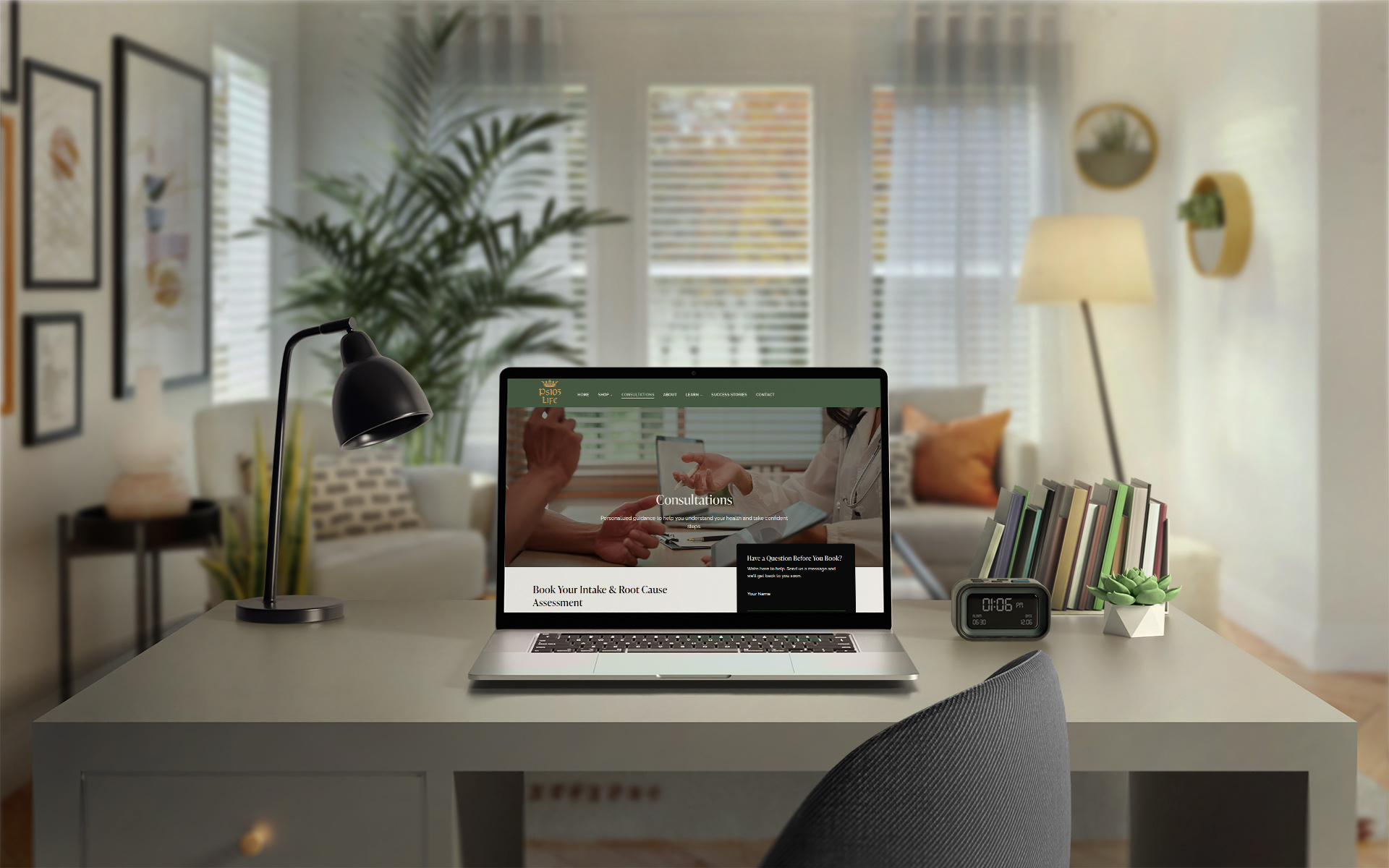
PS103 Life is a wellness brand website I designed to showcase what a modern, accessible, and beautifully designed online health business looks like. Every design decision, from the font choices and color contrast to the page structure and navigation, was made with both the user and accessibility best practices in mind. The goal wasn’t simply to meet accessibility requirements, but to create a wellness website that feels welcoming, professional, and easy for everyone to use.
Here’s what you’ll notice right away:
- Clean, readable typography that’s easy on the eyes across all devices.
- Strong color contrast between text and background elements.
- Intuitive navigation that’s simple to follow without overwhelming the visitor.
- A clear content hierarchy using headings to guide the reader naturally through the page.
- Images with descriptive context that communicate meaning beyond just aesthetics.
This is what an accessible wellness website looks like when it’s done well – not a stripped-down, clinical website, but a warm, inviting, and professional online presence that works for everyone.
Accessibility and beautiful design are not mutually exclusive. Your wellness website can be both inclusive and visually engaging.
Choosing the Right Web Designer for an Accessible Website
Creating an accessible website involves far more than choosing readable fonts and adding alt text to images. Many of the most important accessibility features happen behind the scenes through proper coding, semantic page structure, keyboard-friendly navigation, skip-to-content links, form labeling, and other technical elements that help assistive technologies interpret and navigate your website.
Because of this, accessibility should be built into the design and development process from day one – not added later as an afterthought.
When evaluating a web designer, it’s worth asking how accessibility is addressed both visually and technically. Not all web designers are familiar with accessibility standards or build websites with WCAG guidelines in mind.
A website that is designed and developed with accessibility at its core is easier to use, more inclusive, better positioned for search engines, and more welcoming to every potential client who visits your business online.
The most effective wellness websites don’t just attract visitors – they make every visitor feel welcome.
Ready to make an impact?
Let’s Collaborate
Let’s discuss how we can bring your vision to life and create something extraordinary together.
